

Residential Apartments
Local Pest Control Solutions for Residential Property Management
Effective Pest Management for Apartment Blocks - Fully Licensed, SafeContractor & Bilfinger Accredited - Dublin & Leinster - Owl Pest Control
Keeping Apartment Blocks and Residential areas Free of Vermin

Managing pest problems across an apartment development requires a very different approach from treating an individual home. A pest problem reported in one apartment may originate from a common area, neighbouring unit, wall cavity, bin store, drainage system or structural defect elsewhere in the development.
Owl Pest Control provides specialist apartment block pest control for professional property managers, managing agents, Owners’ Management Companies and residential developments throughout Dublin and Leinster.
Since 1998, we have developed our pest management systems around the practical needs of property and facility managers. Our service combines preventative inspections, pest monitoring, rapid response to reported infestations, detailed electronic reporting, site mapping, pest proofing and investigation of the underlying causes of recurring pest activity.
For property managers, the objective is simple: one experienced pest-control company that can manage routine prevention, respond to residents’ concerns and provide clear information about what is happening throughout the development.
Specialist Pest Control for Property Managers and Managing Agents
Residential property managers are rarely present when our technician attends a development. They may be managing numerous properties, dealing with residents, contractors and Boards of Management simultaneously. Good communication is therefore as important as good apartment block pest control.
Our procedures have been developed so that our technicians can inspect and service a development efficiently while providing the property manager with a clear record of their findings.
Service reports include photographs of pest evidence, building defects, housekeeping concerns and other conditions requiring attention. Reports are electronically archived, creating a useful historical record for the development.
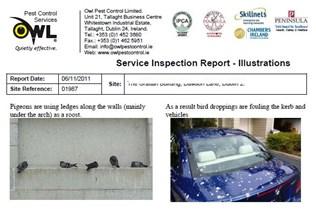
Where we attend an individual apartment, information relevant to the resident can be kept separate from recommendations concerning common areas or building-wide problems that need to be brought to the property manager’s attention. This makes apartment block pest control easier to manage even when the property manager is working remotely.
Why Apartment Developments Need a Different Approach to Pest Control
An apartment block is effectively one interconnected building containing many individual living spaces. Pests do not recognise the boundaries between private apartments and common areas.
Pipework, ducts, wall cavities, risers, suspended ceilings, drains, service penetrations and communal areas can allow pests to move through a development. A problem noticed in Apartment 12 may therefore have originated somewhere completely different.
This is why repeatedly treating individual apartments without investigating the wider development can sometimes provide only temporary relief. A successful apartment block pest control programme considers:
- Individual apartments
- Internal common areas
- Underground and surface car parks
- Bin stores and waste areas
- Plant and service rooms
- Landscaped areas
- Building perimeters
- Roof and attic spaces where applicable
- Service ducts and risers
- Drains and manholes
- Structural pest-entry points
The larger and more complex the development, the more important this coordinated approach becomes.
Common Pest Problems in Dublin Apartment Blocks
Different developments experience different pest pressures depending on their construction, location, age, waste arrangements and surrounding environment. High-rise buildings are especially prone to pest infestations. However, several pests occur particularly frequently in managed residential developments.
Rats and Mice
Rodents are among the most important pests around apartment complexes. Rats may be associated with bin stores, landscaped areas, car parks, drainage systems and external building perimeters. Mice can exploit small openings and subsequently move into service voids, wall cavities and apartments.
A rodent sighting does not automatically mean there is a nest at that exact location. The animal may be travelling between harbourage, food and water sources. The important question is therefore not simply “where was the rat seen?” but why is it there and how is it reaching the development?
Ants
Ant infestations can become particularly challenging in multi-unit residential buildings. Where an ant colony or interconnected colonies affect several apartments, treating individual units independently may fail to resolve the wider problem. Ants can move through structural voids, service routes and adjoining areas.
Early detection of ant activity and coordinated treatment can therefore be essential. Where a development-wide programme is required, access to affected apartments is extremely important. Untreated units can potentially provide areas from which activity persists or spreads again after neighbouring apartments have been treated.
Cockroaches
Cockroaches can spread through multi-unit buildings using service ducts, pipework routes, wall voids and other connections between apartments.
A cockroach infestation should therefore be investigated beyond the apartment where the insects were first reported, particularly where there is evidence that activity involves neighbouring units or common infrastructure. Early reporting and coordinated access can make treatment considerably more effective.
Silverfish
Silverfish are regularly reported in apartments, particularly in humid areas such as bathrooms and kitchens. An isolated sighting does not necessarily indicate a serious infestation, but repeated activity may warrant investigation of moisture, humidity and potential harbourage.
Wasps
Wasps may establish nests in wall cavities, roof spaces, vents, balconies, landscaped areas and other sheltered locations. Where a nest is close to an entrance, walkway, balcony or other regularly occupied area, professional assessment and treatment may be required.
Pest Birds
Pigeons and other birds can create problems through nesting, roosting and fouling of balconies, roofs, ledges and other building features. Appropriate bird-control measures depend on the species, location and nature of the problem and must take account of applicable wildlife legislation.
Seasonal changes can also impact apartment block pest control problems.
Common Areas Versus Pest Problems Inside Apartments
One of the recurring challenges for property managers is determining whether a reported infestation relates to an individual apartment or to the wider development – who is responsible? There is not always an immediate answer.
A mouse reported inside an apartment, for example, may have entered through a defect within that apartment. Alternatively, it may have travelled through a common service void before finding an internal opening.
Similarly, ants or cockroaches reported by one resident may form part of a wider infestation involving several units. Our technicians therefore look beyond the immediate sighting where appropriate.
When carrying out a call-out inside a private apartment, we can provide information for the resident while separately reporting common-area or structural issues requiring action by the property manager. This avoids confusing responsibilities and gives the managing agent the information needed to decide what happens next.
Coordinating Pest Treatments Across Multiple Apartments
Some of the most difficult residential pest problems cannot be solved apartment by apartment. Where insects such as pharaoh ants or cockroaches have spread through a development, a coordinated programme may be required across multiple units. The effectiveness of such programmes depends heavily on organisation.
We can work with the property manager to establish:
- Which apartments require inspection or treatment
- A logical treatment schedule
- Information residents need before treatment
- Access arrangements
- Follow-up visits
- Recording of inaccessible apartments
- Monitoring of continuing activity
- Communication of findings to management
Resident cooperation is particularly important. If several adjoining apartments require treatment but one cannot be accessed, that untreated area can complicate efforts to achieve control across the development.
For larger apartment block pest control infestations, we therefore regard access management and communication as part of the pest-control programme itself rather than simply an administrative issue.
What Should a Property Manager Ask When a Resident Reports Pests?
Good information at the initial apartment block pest control reporting stage can save considerable time. When a resident contacts you about a pest problem, try to establish:
1. What pest did they see? Ask for a description or, ideally, a photograph.
2. How many were seen? One occasional insect can mean something very different from repeated sightings.
3. Where exactly was the pest found? Establish the apartment number or precise common-area location.
4. When was it first noticed? Find out whether the problem started today, several days ago or has been occurring for months.
5. How frequently is it happening? Daily sightings and occasional sightings may require different investigative approaches.
6. Is the resident available to speak to the pest-control technician? First-hand information can be extremely helpful when no pest activity is visible during the inspection.
Passing these details to us before attendance helps our technician prepare for the inspection and concentrate on the most relevant areas.
Our Apartment Block Pest Control Programme
Preventative apartment block pest control should be based on the risks at the individual development rather than simply following the same standard programme everywhere.
Depending on the property, an ongoing service may incorporate routine inspection of common areas, monitoring of rodent activity, inspection of building perimeters, recommendations concerning waste and vegetation, visual checks for potential structural access and responsive treatment when pest problems arise.
The programme can be adapted as pest pressures change.
Computerised Pest Control Site Maps
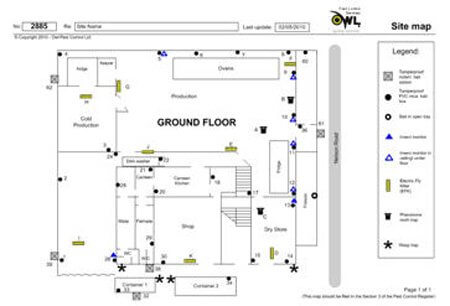
Larger developments may contain numerous pest-monitoring points. Each needs to be identifiable so technicians know precisely what should be inspected and property managers can understand where activity is occurring.
We systematically produce computerised site maps showing numbered pest-control points and relevant areas of concern. Technicians have access to the appropriate site information when attending, supporting continuity if a different member of our team services the development.
Mapping also allows recurring activity to be associated with particular parts of a property rather than existing only as general notes on service reports.
Individually Dated Rodent Monitoring Points
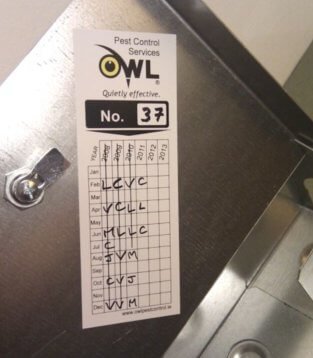
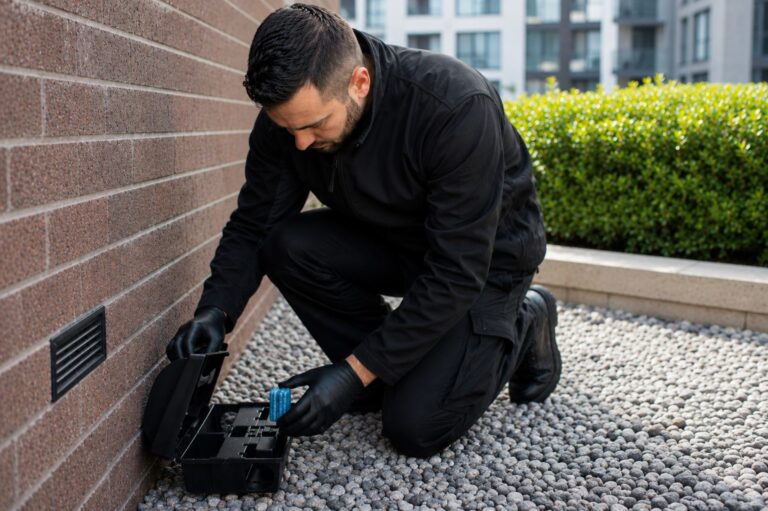
A bait station sitting beside a building tells a property manager very little about when it was last inspected. Owl Pest Control manually dates control points during servicing. This provides a straightforward physical record at the monitoring location itself.
For property managers and Boards of Management, this means individual points can be spot-checked without needing specialist software. Depending on the apartment block pest control programme and monitoring materials being used, servicing may involve inspection, cleaning, replacement of deteriorated materials and recording of pest activity.
Together with numbered site maps and electronic reporting, the dated control-point system provides an additional layer of service accountability.
Responsible Rodent Management and Integrated Pest Management
Modern rodent control should not depend solely on placing rodenticide around an apartment development. We use an Integrated Pest Management approach, considering the conditions that allow rodents to survive and enter the property as well as the immediate infestation.
Depending on the findings, recommendations may include:
- Removing accessible food
- Improving waste management
- Reducing harbourage
- Managing vegetation
- Repairing structural defects
- Pest proofing
- Addressing water sources
- Investigating drainage problems
- Using traps, monitoring devices or other appropriate controls
- Targeted use of authorised rodenticides where required
Where biocidal products are necessary, they must be used in accordance with their authorised labels and applicable Irish requirements. This approach is intended to address the cause of recurring activity rather than simply reducing rodent numbers temporarily.
Reports Designed for Property Managers
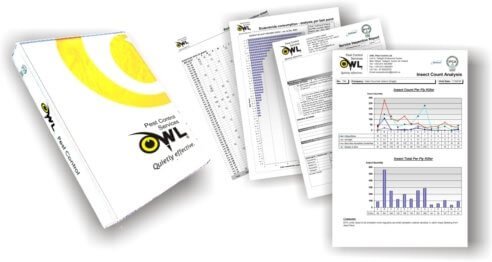
Property managers need useful information, not simply confirmation that somebody attended. Our apartment block pest control service reports are designed to answer four fundamental questions.
What did we find?
This can include pest activity, droppings, damaged monitoring materials, harbourage or other evidence.
What did we do?
The report records relevant inspection, monitoring or treatment undertaken during the visit.
What needs to be corrected?
Where appropriate, photographs can illustrate proofing defects, waste issues, vegetation, drainage concerns or other environmental conditions requiring attention.
What happens next?
The technician can record recommendations or indicate where further inspection, treatment or remedial work may be required. Reports are electronically archived so historical information can be retrieved when needed.
This can be particularly useful when preparing for management meetings, reviewing recurring problems or investigating a resident complaint that has occurred previously.
Separate Reporting for Residents and Property Management
Information provided to a resident is not always the same information required by the property manager. For example, our technician may treat a mouse problem inside an apartment but identify an external building defect or common service route that may have contributed to the infestation.
The resident needs information about the treatment inside their home. The property manager needs to know that a building-level issue may require attention.
Where appropriate, we can separate these communications so the managing agent receives the relevant common-area or structural recommendations without unnecessarily sharing management information with residents.
This is a small but important part of providing professional apartment block pest control.
Preventing Rats and Mice Around Residential Developments
Rodent prevention usually centres around four fundamentals: food, harbourage, access and water.
1. Control Food Sources
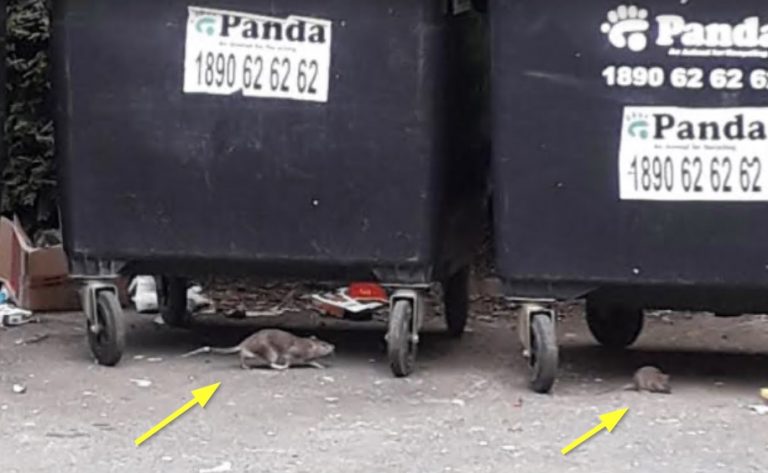
Common problems include:
- Bin bags left beside containers
- Wheelie-bin or communal-bin lids left open
- Food waste around bin stores
- Residents feeding birds or other animals
- Food debris around landscaped or communal areas
Improving these conditions can significantly reduce the attractiveness of the development to rodents.
2. Reduce Harbourage
Dense low-level vegetation, accumulated rubbish and stored materials can provide sheltered areas for rodents. Landscaping should be maintained and unnecessary clutter removed, particularly around bin stores and building perimeters.
3. Prevent Building Access
Structural openings around pipes, cables, vents, doors and other service penetrations should be investigated and appropriately sealed. Mice can exploit remarkably small openings, so apparently minor building defects can be significant from a pest-control perspective.
4. Address Water Sources
Leaks, standing water, defective drains and other accessible water sources can contribute to rodent activity. Recurring external rat problems deserve investigation rather than simply repeated treatment.
Recurring Rats in Apartment Developments: Could the Drains Be the Source?
Not every recurring rat problem is caused by poor waste management. Norway rats commonly inhabit sewer systems. Defective drainage infrastructure can sometimes provide a route from the sewer into landscaped areas, wall cavities or buildings.
Warning signs can include repeated rat activity around the same location despite conventional control, burrowing close to manholes or structures, or unexplained activity where obvious food and harbourage sources have already been addressed. Where our apartment block pest control inspection indicates a possible drainage-related problem, further investigation may be recommended.
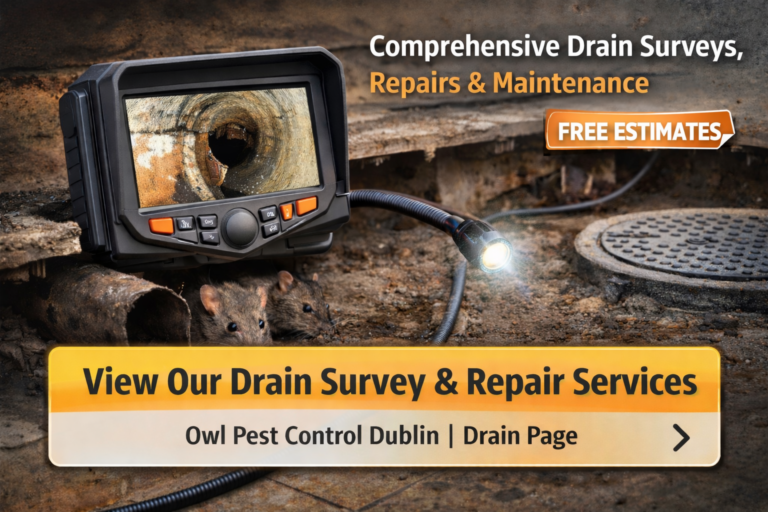
Owl Pest Control can provide CCTV drain surveys and smoke testing to investigate potential defects and routes of rodent access. Where appropriate, we can also undertake remedial drain repairs. This allows the property manager to move from repeatedly controlling rats after they appear to potentially identifying and repairing the route by which they are entering the development.
Pest Proofing and Structural Repairs
Pest control and building maintenance frequently overlap. A technician may identify a gap around a service pipe, damaged vent, defective external wall, poorly sealed doorway or another structural weakness that allows pests into a building.
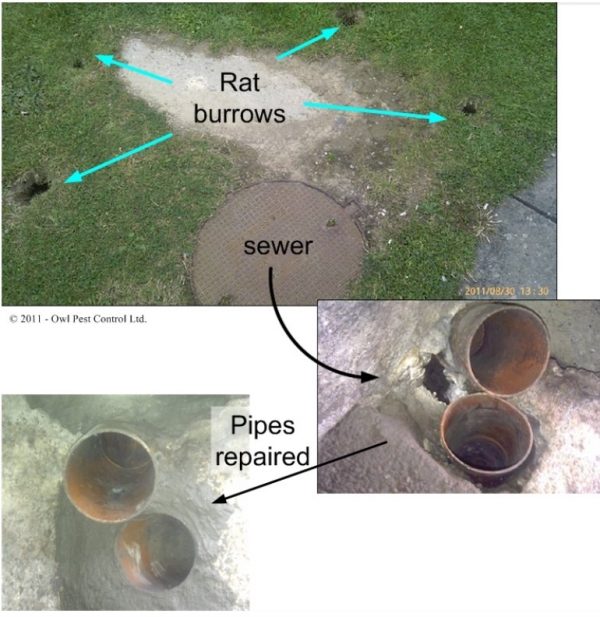
Reporting the defect is the first step. Owl Pest Control provides pest-proofing and structural repair services where appropriate. Potential work can include protection or repair of pest entry points around:
- Pipes and service penetrations
- Ventilation openings
- External walls
- Doors
- Wall cavities
- Manholes
- Drainage infrastructure
- Other accessible structural openings
Combining apartment block pest control with appropriate remedial work can provide a much more durable solution to recurring infestations.
Bin Stores: One of the Highest-Risk Areas in Apartment Developments
Communal bin areas deserve particular attention. They provide concentrated sources of food and can offer shelter, water and relatively little human disturbance. Overflowing bins, damaged containers and food waste deposited on the floor can rapidly increase the attractiveness of a development to rodents, flies and other pests.
Good management includes keeping containers closed, arranging appropriate collection capacity, cleaning spillages and preventing rubbish from accumulating around the outside of the bin store. Where rodents are repeatedly being found around a bin area, we also investigate where they may be coming from rather than assuming the waste facility itself is the only cause.
Managing Keys, Fobs and Access
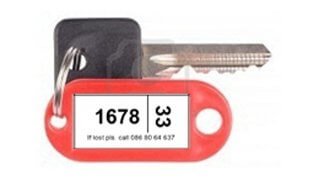
Routine apartment block pest control inspections often require access when no property-management representative is on site. Where we are entrusted with keys, fobs or other access devices, these are managed through controlled company procedures, including coding the keys so the property cannot be identified in case of accidental loss.
This allows scheduled inspections to proceed with minimal demand on the property manager while recognising the security responsibilities associated with access to residential developments. For treatment inside individual apartments, access arrangements are agreed according to the requirements of the job and the property manager.
Responding Quickly to New Pest Reports
Early intervention is one of the simplest ways to prevent a small pest problem becoming expensive. A single reported rat, repeated mouse sightings or the first reports of cockroaches or unusual ant activity should not automatically be dismissed as isolated incidents.
The earlier we can establish what is happening, the easier it is to determine whether the problem concerns one apartment, a common area or a wider section of the development. For contracted developments, the precise call-out arrangements depend on the agreed service specification.
Annual Review of Pest Management Programmes
Residential developments change. Landscaping matures. Waste arrangements change. Building works take place. New tenants arrive. Pest pressures in the surrounding area can also change. An ongoing pest-management programme should therefore be reviewed rather than simply repeated indefinitely.
We review apartment block pest control programmes to consider whether the existing monitoring strategy remains appropriate and whether recommendations or adjustments could improve effectiveness or control unnecessary costs.
Why Property Managers Choose Owl Pest Control
Owl Pest Control has specialised in property and facility management pest control since 1998.
We understand that professional managing agents need considerably more than somebody who can eliminate a mouse or treat an insect infestation.
They need a contractor who can work independently, communicate with residents appropriately, understand common-area responsibilities, document findings and recognise when the real solution involves building maintenance or drainage rather than another pest treatment.
Our apartment block pest control service can provide:
- Preventative pest-management programmes
- Routine inspections
- Responsive pest call-outs
- Computerised pest-control site maps
- Numbered monitoring points
- Manually dated rodent control points
- Detailed electronic reports
- Photographic reporting
- Historical service records
- Separate management and resident reporting where appropriate
- Pest-proofing recommendations
- Structural pest-proofing work
- CCTV drain surveys
- Smoke testing of drainage systems
- Remedial drain repairs where appropriate
- Multi-apartment treatment programmes
- Support coordinating complex infestations
- Controlled key and fob management
- Health and Safety documentation
- Regular programme reviews
With more than 100 property and facility management clients and thousands of properties, our apartment block pest control systems have been developed around the real operational requirements of professional property managers.
One Pest Control Partner for Your Residential Portfolio
Managing multiple developments is considerably easier when your pest-control contractor understands how residential property management works.
Whether you require a preventative contract for one apartment block, pest management across a portfolio of developments or specialist assistance with a difficult building-wide infestation, we can assess the situation and recommend an appropriate programme.
Contact Owl Pest Control to discuss your apartment block pest control requirements or arrange a site assessment.
Call us on 01 452 3680 or email info@owlpestcontrol.ie.
Fully Licensed
We are fully licensed by the Department of Agriculture
HACCP Certified
Our technicians are highly trained and certified pest controllers
Fast Response
Fast Emergency Response. Pest Inspections in all Co. Dublin
Cost Effective
Competitive Pest Management quotations & best value for money
Frequently Asked Questions About Apartment Block Pest Control
► Who is responsible for pest control in an apartment block?
Apartment block pest control responsibility depends on where the infestation originates and the arrangements governing the property. Pest activity in common areas or arising from building-level defects may need to be dealt with by property management, while some problems confined to an individual apartment may fall under different arrangements.
Establishing the source of the infestation is therefore important before assuming responsibility. Property Managers should always be aware of their legal responsibilities regarding Pest Control.
► How often should apartment block pest control inspections be carried out?
There is no single inspection frequency appropriate for every development. The schedule should reflect factors including previous pest history, building size and construction, waste facilities, surrounding environment and the level of rodent or insect risk. Higher-risk developments may require more intensive monitoring than properties with little history of pest activity.
► Should every apartment be treated if one resident reports pests?
Usually not. A single pest report does not automatically justify treating an entire development. The pest species, location and evidence should first be investigated. However, pests such as cockroaches or certain ants can spread between apartments, and evidence of a wider infestation may justify coordinated inspection or treatment of multiple units.
► Why can treating only one infested apartment fail?
In multi-unit buildings, pests can sometimes move through service penetrations, structural voids and neighbouring apartments. If the infestation extends beyond the reported unit, treating that apartment alone may leave other areas unaffected and allow activity to continue. The appropriate apartment block pest control treatment area should therefore be determined by inspection and monitoring.
► What happens if residents do not provide access for a coordinated treatment?
Inaccessible apartments can complicate a multi-unit treatment programme where those apartments form part of the affected area. Property managers should therefore communicate clearly with residents about why access is required and coordinate appointments so the relevant units can be treated and followed up as consistently as possible.
► Why do rats keep returning to an apartment development?
Recurring rats can indicate accessible food, harbourage, vegetation, structural openings, water sources or drainage problems. Repeatedly controlling the rats without addressing the underlying attraction or access route may provide only temporary results. Investigation of the wider environment is an important part of long-term control.
► Can rats enter apartment blocks through drains?
Drainage defects can provide routes for rats associated with sewer systems. Where recurring activity suggests a drainage connection, CCTV drain inspection or smoke testing can help investigate potential defects or access routes.
► Do you provide pest control inside residents’ apartments?
Yes. Depending on the service arrangement, we can attend individual apartments as well as common areas. Where an apartment block pest control inspection identifies issues affecting the wider development, these can be reported separately to property management.
► Can you manage an infestation affecting dozens of apartments?
Yes. Larger infestations require careful scheduling, access coordination, treatment records and follow-up. The apartment block pest control programme is designed around the pest involved and the extent of the affected area rather than treating each apartment as an unrelated individual call-out.
► Do you provide reports after pest-control visits?
Yes. Our apartment block pest control service reporting records relevant findings and actions and can include photographs and recommendations. Reports are electronically archived, helping property managers maintain a historical record of pest activity at the development.
► Why are pest-control monitoring points numbered and dated?
Numbering allows monitoring points to correspond with the site’s pest-control map and records. Dating applicable control points provides a visible indication of servicing and gives property managers an additional way to spot-check the programme.
► Is permanent rat poison necessary for apartment block pest control?
Not necessarily. Rodent control should follow a risk-based Integrated Pest Management approach. Environmental management, hygiene, proofing, monitoring and physical controls should all be considered, with authorised rodenticides used where appropriate and in accordance with their labels and regulatory requirements.
► Can Owl Pest Control repair the building defects causing pest problems?
We can undertake appropriate pest-proofing and structural repair work. Where rats are suspected of entering through defective drainage infrastructure, we can also provide CCTV drain investigation and remedial drain repairs where appropriate.
► What information should we provide when reporting a resident’s pest complaint?
Ideally provide the pest or a photograph, exact location, number seen, when activity began, how frequently it occurs and contact details for the resident where they have agreed to be contacted. This information can make the technician’s inspection considerably more effective.
► Can you provide apartment block pest control across several developments?
Yes. Pest management can be organised for individual apartment blocks or portfolios of residential developments. Consistent reporting, mapping and service procedures can make it easier for managing agents to maintain oversight across multiple properties.
Contact Owl Pest Control
Do you have a Pest Control problem, need to talk to an expert?
Contact Owl Pest Control today!

Unit 19, Tallaght Business Centre, Whitestown Road, Tallaght, Dublin 24. D24 TD42