

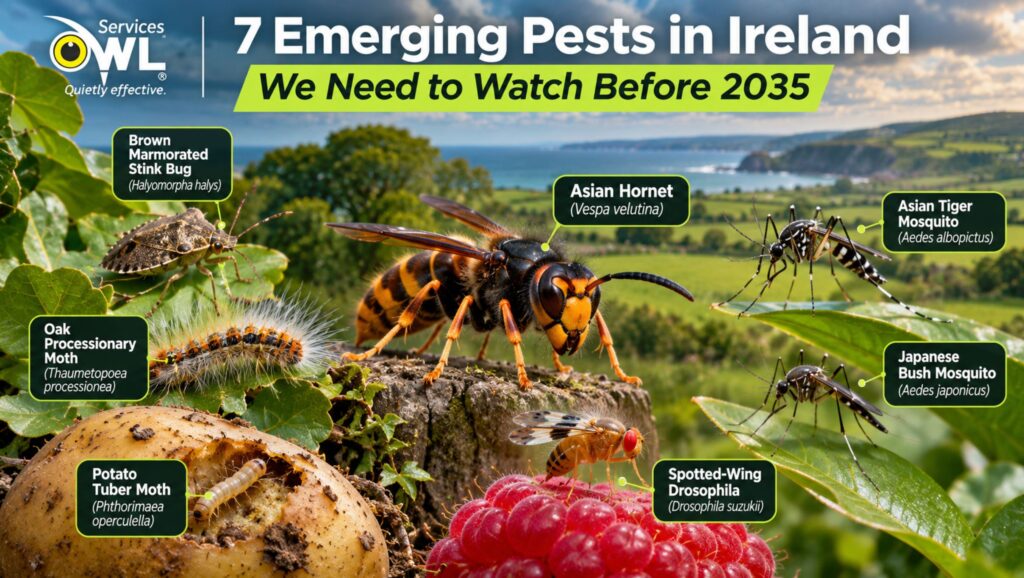
7 Emerging Pests in Ireland We Need to Watch Before 2035
In October 2026, wildlife officers in Cork attached a tiny radio transmitter to a live Asian hornet, released it and followed the signal back to its nest. It sounds more like science fiction than pest control.
But the operation near Ringaskiddy successfully located an invasive Asian hornet nest within hours, allowing specialists to treat and remove it before young queens could potentially disperse and establish new colonies.
For anyone working in pest management, agriculture, food production or biosecurity, there is a bigger story here: Ireland’s pest landscape is changing.
International trade and travel continually provide opportunities for insects to arrive here. Meanwhile, warmer conditions can make Ireland suitable for species that previously struggled to complete their lifecycle or survive our winters.
That does not mean Ireland is about to become overrun with tropical insects. Most introduced species never establish successfully. But some do. The National Biodiversity Data Centre reports that more than 30 insect species have been recorded in Ireland for the first time in recent years. Some appear to be genuinely recent arrivals and are already beginning to spread.
Ireland is taking the risk seriously. In 2026, Government established a new Invasive Species Bureau, while DAFM launched Irish Pest Emergence Maps capable of modelling potential insect development under future climate conditions for 2035 and 2055.
So which emerging pests in Ireland deserve the closest attention? Here are seven we believe are particularly worth watching.
First, an Important Point: Arrival Does Not Mean Establishment
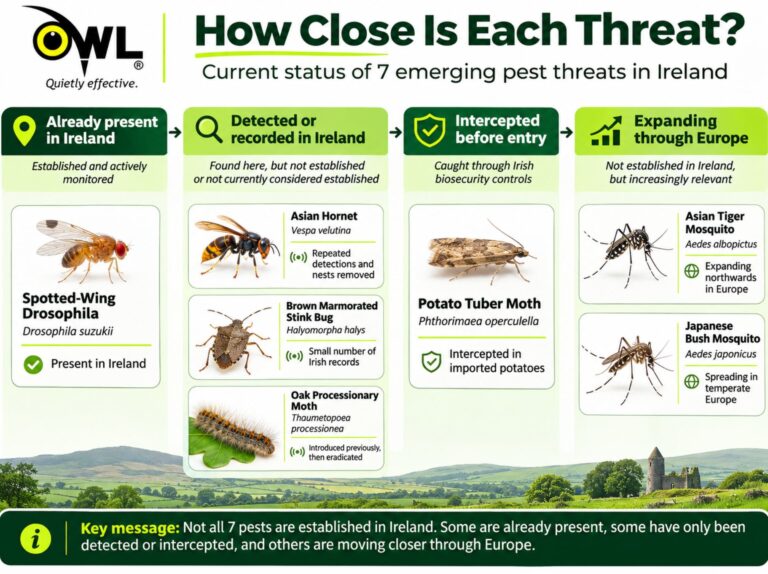
Before looking at individual species, it is worth understanding three very different situations. An insect may be:
- Intercepted — found in imported goods before escaping into the wider environment.
- Introduced — found temporarily outdoors or on imported material.
- Established — reproducing successfully over successive generations without continual reintroduction.
These distinctions matter. Finding one Asian tiger mosquito in imported goods, for example, would be very different from discovering a breeding population. Likewise, Ireland has already encountered several species on this list without allowing them to establish. That is actually evidence that biosecurity can work.
1. Asian Hornet: Ireland’s Most Immediate Invasive Insect Threat
Current Irish status: Detected repeatedly, but not considered established
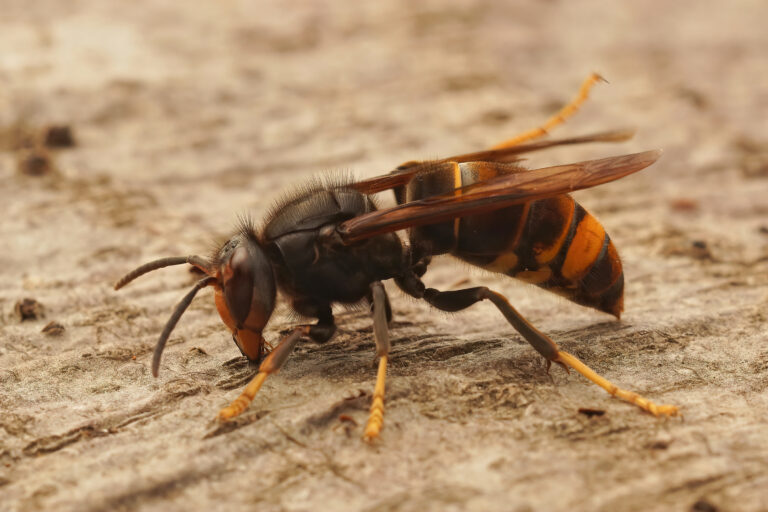
The Asian hornet, or yellow-legged hornet (Vespa velutina), deserves first place because this is no longer a theoretical threat. Originally native to Asia, the species was accidentally introduced into France in 2004 and subsequently expanded through several European countries.
Ireland’s first live Asian hornet was recorded in 2021, then things became considerably more serious. In 2025, Ireland recorded 36 confirmed Asian hornet sightings, with two nests discovered and destroyed in Cork. Another Asian hornet was reported near Ringaskiddy in September 2026. Intensive surveillance subsequently confirmed additional activity.
NPWS conservation rangers eventually attached a miniature radio transmitter to a captured hornet and tracked it back to the nest.
More recently, the issue moved even closer to home. In November 2026, two Asian hornets were confirmed in Dublin city — one in the Liberties on 8 November and another in the Grand Canal Dock area three days later. Both sightings were verified by the National Biodiversity Data Centre. NPWS carried out extensive searches and surveillance, although no nest was found and the hornets may have been isolated individuals.
Combined with the Cork nests found in 2025 and 2026, these Dublin sightings show why continued surveillance is so important.
Why Asian Hornets Matter
Asian hornets prey heavily on other insects, particularly bees. They therefore represent a threat not simply to commercial beekeeping but also to native pollinators including bumblebees, solitary bees and hoverflies. Ireland’s objective remains prevention of establishment, rather than accepting the Asian hornet as another routine pest.
That distinction is important: If the species becomes established nationally, eradication becomes much more difficult than eliminating individual incursions.
Could Asian Hornets Become a Pest-Control Callout?
Potentially, yes. In countries where populations have become established, nests can occur around buildings, trees and urban environments. However, while Ireland remains in eradication mode, suspected Asian hornets or nests should not simply be treated as ordinary wasp jobs.
Sightings should be photographed where safely possible and reported through the official invasive-species reporting system. Professional pest controllers will increasingly need to recognise when something is a routine pest problem and when it is potentially a national biosecurity issue.
That distinction may become increasingly important during the next decade.
2. Asian Tiger Mosquito: Europe’s Expanding Public-Health Pest
Current Irish status: Not established
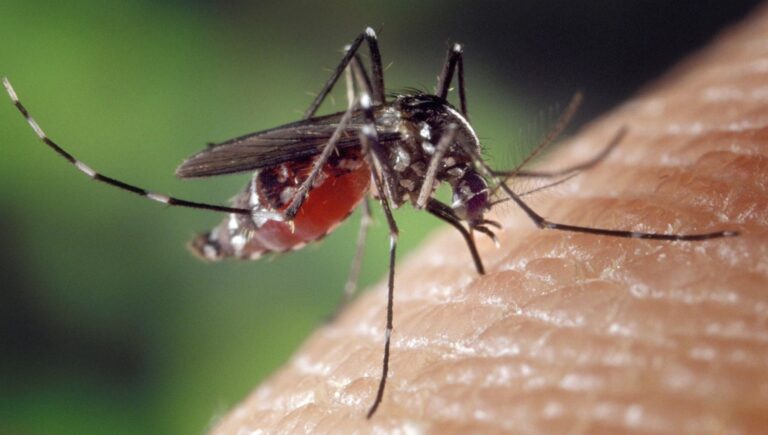
Few insects demonstrate Europe’s changing pest landscape more clearly than the Asian tiger mosquito (Aedes albopictus). It is recognisable by its dark body, conspicuous white markings and characteristic white stripe running along the thorax.
By April 2026, ECDC recorded established Asian tiger mosquito populations across 384 European administrative regions in 16 EU/EEA countries. Its range expanded again between 2025 and 2026.
It is important to be precise here: The Asian tiger mosquito is not currently established in Ireland. But its European expansion is highly relevant. Unlike Ireland’s ordinary nuisance mosquitoes, Aedes albopictus is capable of transmitting viruses including dengue and chikungunya.
In 2026, locally acquired dengue cases were recorded in France and Italy. That does not mean dengue is about to become an Irish disease. Transmission requires several factors to coincide, including an established competent mosquito population and introduction of the virus through an infected person.
Nevertheless, ECDC now considers mosquito surveillance and coordinated vector control an increasingly important European public-health requirement.
Why Ireland Should Watch It
One reason is climate suitability. ECDC notes that climate modelling suggests increasingly favourable conditions for Aedes albopictus in parts of western and northern Europe over coming decades.
Another reason is transport: Mosquito eggs and larvae can travel surprisingly long distances in containers capable of holding water. The danger is therefore not that tiger mosquitoes will simply fly across the sea to Ireland. It is repeated introduction through human activity followed, eventually, by conditions suitable enough for a population to survive.
3. Japanese Bush Mosquito: Perhaps the Less Famous Mosquito We Should Watch
Current Irish status: Not established
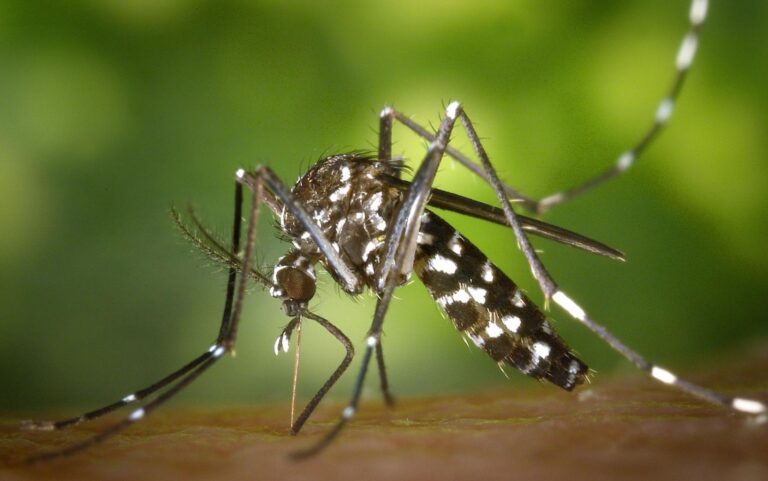
The Asian tiger mosquito gets most of the publicity. But another invasive mosquito may actually deserve more attention in northern European countries. Aedes japonicus, commonly called the Japanese bush mosquito or Asian bush mosquito, is already spreading through temperate Europe.
Between the 2025 and April 2026 ECDC updates alone, it became established in 30 additional European administrative regions, including areas in Germany, France, Italy, the Netherlands, Poland and Slovakia. What makes this species particularly interesting for Ireland is its tolerance of cooler conditions.
ECDC describes Aedes japonicus as capable of surviving winter temperatures in temperate regions and breeding in a wide variety of natural and artificial water containers.
That does not mean it will establish in Ireland. It does mean that when discussing emerging pests in Ireland, it would be a mistake to concentrate only on traditionally warm-climate species.
A Future Pest-Control Discipline: Mosquito Identification
Irish householders already encounter native mosquitoes. HPSC states that Ireland’s commonest mosquito is Culex pipiens, and Irish mosquitoes have not been demonstrated to transmit human infections. During the warm summer of 2026, however, online Irish discussions repeatedly featured householders reporting noticeably more mosquitoes indoors and more biting activity.
Those reports are anecdotal, not scientific evidence of a national population increase. They do demonstrate something useful: public awareness of mosquito identification in Ireland is still low.
If invasive mosquitoes eventually arrive, professional identification and surveillance will become far more important than simply spraying whatever flying insect happens to be present.
4. Brown Marmorated Stink Bug: A Crop Pest That Could Also Invade Buildings
Current Irish status: Recorded, but no evidence yet of an established population
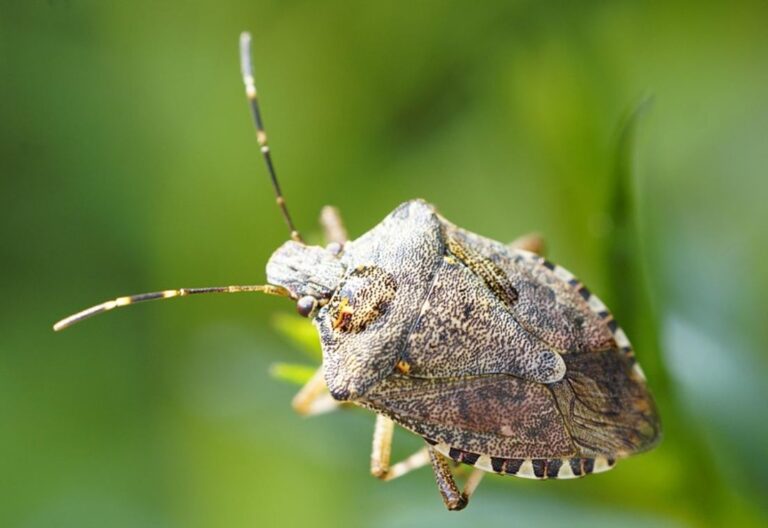
The brown marmorated stink bug (Halyomorpha halys) is perhaps the most interesting crossover between agricultural pest and conventional structural pest control. Native to East Asia, it has become a significant invasive pest in parts of Europe and North America.
It feeds on a very wide variety of crops including fruit, vegetables and ornamental plants. But its behaviour creates another problem: when temperatures fall, adults seek protected places in which to overwinter. That can mean houses, warehouses and commercial buildings.
In countries with large populations, enormous numbers can aggregate inside structures.
It Has Already Been Recorded in Ireland
The National Biodiversity Data Centre currently lists three Irish records of brown marmorated stink bug, across two 10-kilometre grid squares, dating from January to April 2024. Three records do not demonstrate that the species is breeding here.
But DAFM considers the insect sufficiently relevant to include it in its Irish Pest Emergence Maps. Those models can estimate when development could occur and how many generations might potentially be completed under current and future climate scenarios.
Ireland is also directly involved in European research into monitoring the species. Teagasc and Tyndall National Institute have worked on AI-based detection systems designed to identify brown marmorated stink bugs automatically in traps.
Why Pest Controllers Should Care
If Halyomorpha halys eventually establishes here, the first calls may not necessarily come from orchards. They may come from householders asking why dozens — or eventually hundreds — of strange shield bugs are gathering around windows, roof spaces or wall cavities during autumn.
The insects do not normally damage buildings. But when disturbed they can release the unpleasant odour that gives stink bugs their name. For pest-control businesses, this is exactly the sort of species worth learning to recognise before customers begin calling about it.
5. Oak Processionary Moth: Ireland Has Already Stopped It Twice
Current Irish status: Officially absent following eradication
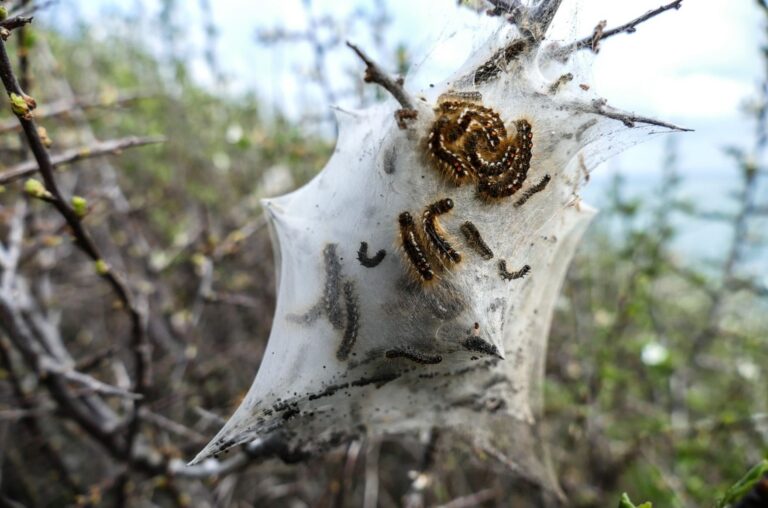
Oak processionary moth (Thaumetopoea processionea) is particularly important because it demonstrates how emerging pests in Ireland can affect plants, people and animals simultaneously. The caterpillars feed on oak trees and can cause significant defoliation.
More importantly from a public-health perspective, older caterpillars develop thousands of tiny irritating hairs. Those hairs can detach and become airborne. Exposure can cause skin rashes, eye irritation and respiratory symptoms in people, while pets and livestock can also be affected.
It Has Already Reached Dublin
Ireland experienced an introduction in 2020. Another outbreak occurred in June 2023 when caterpillars and nests were discovered on four oak trees in a Dublin housing development. The affected trees and nests were destroyed.
Following surveillance, Ireland officially declared the pest eradicated in 2025. Ireland retains Protected Zone status for Oak Processionary Moth. The likely introduction route is imported oak trees from areas where the species occurs.
Its range in Europe has already expanded northwards, with climate considered one possible contributing factor.
This Is Not a DIY Pest
If Oak Processionary Moth caterpillars or nests are suspected, people should not approach, touch or attempt to remove them. DAFM specifically advises reporting suspected sightings immediately because disturbing the nests can release irritating hairs.
This is another likely direction for professional pest management: recognising when control involves more than simply killing an insect. Future technicians may increasingly need to understand biosecurity protocols, species reporting and public-health risk as well as traditional treatment techniques.
6. Potato Tuber Moth: The Pest Ireland Stopped at Dublin Port
Current Irish status: Not established; intercepted in imported produce
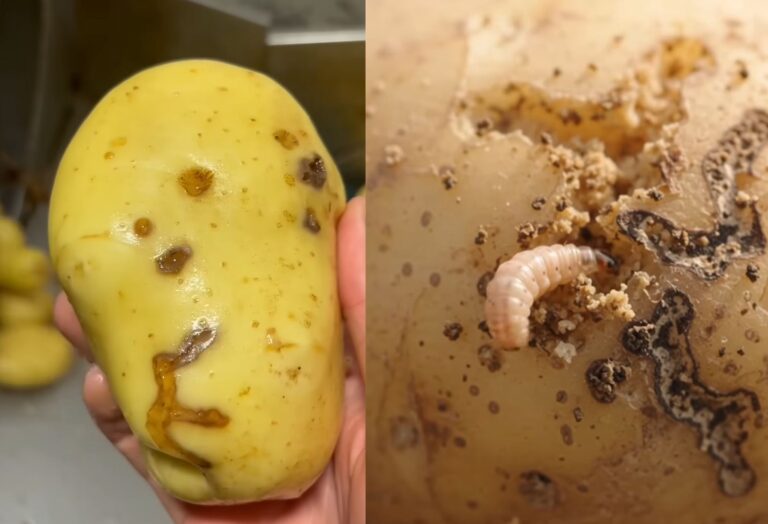
Most homeowners will never encounter a potato tuber moth. But this small insect deserves inclusion because it demonstrates how easily a major future pest can arrive through international trade. Phthorimaea operculella attacks potatoes both in the field and in storage.
Larvae tunnel into potato tubers, damaging produce and potentially making it unsuitable for sale. In 2024, DAFM inspectors detected suspected potato tuber moth in a consignment of potatoes imported from Egypt through Dublin Port.
Laboratory examination confirmed the pest. The consignment was rejected and re-exported before it could move further through Ireland’s supply chain. DAFM estimates that establishment could have serious consequences for Ireland’s potato industry, valued at approximately €80–100 million.
Where Climate Enters the Picture
Ireland’s traditionally cool climate provides a degree of protection against many insect pests. But that protection is not fixed. This is precisely why DAFM, UCD, Met Éireann and the UK Met Office developed the Irish Pest Emergence Maps.
Instead of simply saying that “climate change means more bugs”, the system uses temperature and insect-development data to estimate whether particular pests could complete their lifecycle under current conditions and future 2035 and 2055 scenarios.
That is a far more useful way of assessing emerging pests in Ireland. The crucial question is not merely: Can the pest arrive? Modern trade makes arrival increasingly possible. The important question becomes:
If it arrives, can Ireland’s future climate allow it to survive and reproduce?
7. Spotted-Wing Drosophila: A Warning From a Pest That Has Already Arrived
Current Irish status: Present and actively monitored
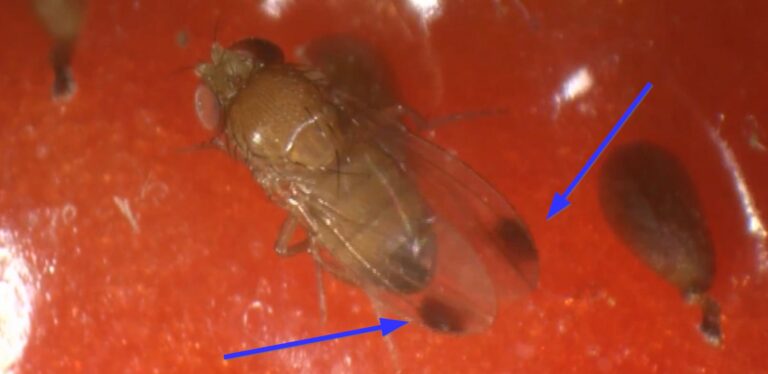
Our seventh species is different. Spotted-wing drosophila (Drosophila suzukii) is no longer a future pest, it is already here. The species was first confirmed in Ireland in June 2015, with specimens detected at commercial fruit farms in Dublin and Wexford.
Unlike the familiar fruit flies attracted mainly to damaged or fermenting fruit, female spotted-wing drosophila can cut into ripening fruit and deposit eggs before harvest. This makes the species particularly important to soft-fruit growers.
Why Include a Pest That’s Already Here?
Because it demonstrates what happens after introduction. Teagasc continues to monitor spotted-wing drosophila around Dublin, including Kinsealy and Ashtown. Recent monitoring updates have recorded activity through winter and, at times, substantial trap counts.
This is important for understanding future pest pressure. Climate change does not need to introduce a completely new species to create a new problem. Sometimes the pest is already present but warmer winters or longer favourable periods allow it to remain active for longer, emerge earlier or complete more generations.
That is exactly the type of change DAFM’s emergence-modelling work is designed to investigate. For emerging pests in Ireland, today’s unusual insect can become tomorrow’s routine monitoring requirement surprisingly quickly.
Are All Seven Pests Going to Become Common in Ireland?
No. And anyone claiming that they definitely will is going beyond the available evidence. Our assessment would be:
| Pest | Current Irish position | What to watch |
|---|---|---|
| Asian hornet | Repeated incursions and nests; not established | Further nests or overwintered queens |
| Asian tiger mosquito | Not established | European northward expansion and introductions |
| Japanese bush mosquito | Not established | Continued spread through temperate northern Europe |
| Brown marmorated stink bug | Small number of Irish records | Evidence of breeding or overwintering populations |
| Oak processionary moth | Introduced previously, then eradicated | New introductions on imported trees |
| Potato tuber moth | Intercepted in imported potatoes | Further interceptions or outdoor establishment |
| Spotted-wing drosophila | Already present | Longer activity periods and increasing crop pressure |
The purpose of surveillance is precisely to prevent that table changing from “not established” to “common pest”.
Why Climate Change Is Only Part of the Story
We previously looked at how a changing climate affects the behaviour of pests already common in Dublin.
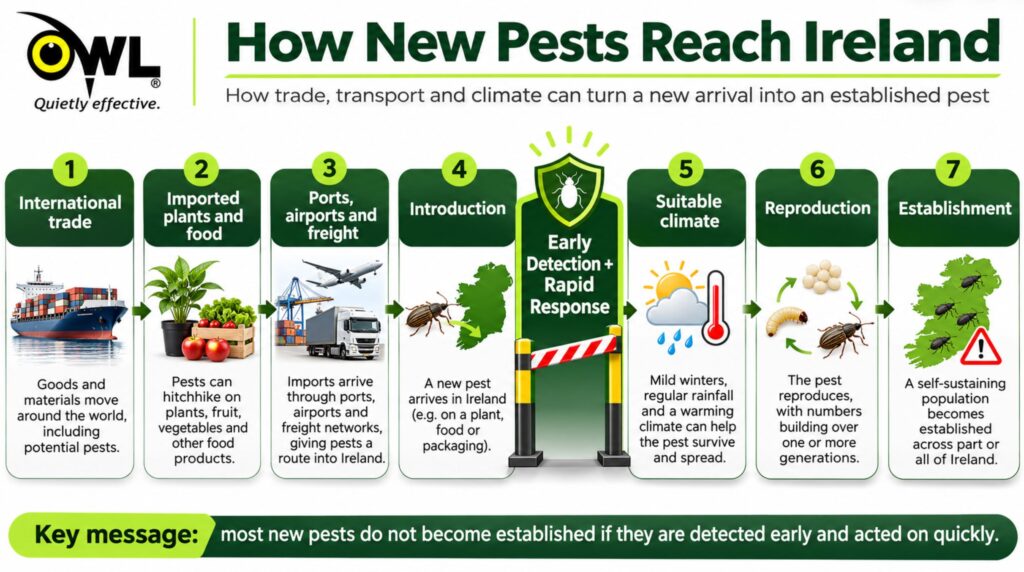
It is tempting to blame every unusual insect on global warming. Reality is more complicated: many invasive insects reach new countries because humans transport them. Common pathways include:
- plants and trees;
- fruit and vegetables;
- timber and packaging;
- shipping containers;
- vehicles;
- luggage;
- imported goods capable of carrying eggs or overwintering adults.
Climate becomes especially important after arrival. An insect introduced repeatedly into Ireland may have failed historically because winters were too cold or summers too short. If future conditions allow enough individuals to survive winter and successfully reproduce, the probability of establishment changes.
This is why biosecurity and climate modelling need to work together. Ireland’s new Invasive Species Bureau and DAFM’s Plant Health and Biosecurity Strategy 2026–2030 both reflect a move towards earlier detection and faster intervention rather than simply dealing with widespread pests after establishment.
What Will This Mean for Pest Controllers?
Twenty years ago, most Irish pest technicians could concentrate overwhelmingly on a familiar list: rats, mice, wasps, ants, flies, cockroaches, fleas, bed bugs and stored-product insects. Those pests are not disappearing. But the knowledge required of technicians is becoming broader.
Future technicians may need to distinguish:
- a native wasp from an Asian hornet;
- an ordinary shield bug from Halyomorpha halys;
- a familiar caterpillar from Oak Processionary Moth;
- a native mosquito from a potentially invasive Aedes species.
That does not mean pest controllers should become amateur epidemiologists or invasive-species scientists. It means knowing enough to recognise when something unusual needs specialist confirmation rather than automatically treating it as a conventional infestation.
At Owl Pest Control, we believe this is an important direction for the profession. Good pest management increasingly begins with correct identification, not just treatment.
What Can Businesses Do Now?
For most Dublin businesses, there is no reason to start installing traps for Asian hornets or worrying about exotic mosquitoes tomorrow morning. The sensible response is much simpler. Food factories, pharmaceutical facilities, warehouses, importers and logistics premises should already have robust pest-monitoring programmes capable of detecting unusual activity.
Incoming goods should be inspected where appropriate. Technicians should investigate unusual insects rather than assuming they are familiar local species. Records and photographs should be retained.
Most importantly, businesses should maintain good relationships with competent pest-management providers who know when a finding requires escalation. Early identification is almost always easier than trying to control a population after it becomes established.
The Irish Asian hornet and Oak Processionary Moth responses have demonstrated this remarkably well.
What Should Homeowners Do if They Find an Unusual Insect?
Do not assume every large wasp is an Asian hornet. Do not assume every mosquito is an invasive tiger mosquito. And do not kill an unusual insect before taking a clear photograph if it can safely be photographed without handling it.
Misidentification is one of the biggest challenges surrounding invasive-species reporting. For potentially regulated or invasive species, photographs and location information can be extremely useful.
Where official reporting requirements exist, use the relevant DAFM, NPWS or National Biodiversity Data Centre reporting route. For ordinary household pest problems, a professional pest controller can usually identify the insect or advise whether further specialist confirmation is required.
Ireland Still Has an Advantage: We Are an Island
Being an island does not make Ireland immune to invasive pests. Ships, aircraft, imported plants and international supply chains effectively bridge that geographical barrier every day. But Ireland still has an important advantage.
We can monitor what enters the country and, when an unusual pest is found early enough, we sometimes have a realistic opportunity to eradicate it before establishment. Oak Processionary Moth is an excellent example. Potato Tuber Moth is another.
The recent Asian hornet response may ultimately prove to be another. Once an invasive pest becomes widespread, control usually becomes vastly more complicated and expensive. That makes prevention and early detection disproportionately valuable.
The Pest We Haven’t Named Yet
Perhaps the most interesting emerging pest in Ireland is the one we do not yet know about. More than 11,000 insect species are currently known from Ireland.
The National Biodiversity Data Centre reports more than 30 species discovered here for the first time in recent years, with some apparently recent arrivals now beginning to establish and spread. Most will never become pests. Some may even be welcome additions to Irish biodiversity.
But history tells us that occasionally a newly arrived species finds exactly what it needs: suitable food, favourable weather, few effective natural controls and an easy route through a human-modified environment. Those are the species that matter.
Good pest management in 2035 will therefore depend just as much on watching, identifying and reporting as it does on insecticides and traps.
Final Thoughts: The Next Irish Pest Problem May Already Be on Its Way
Nobody can accurately predict exactly which invasive insect will become Ireland’s next established pest. What we can see is the direction of travel.
- Europe’s mosquito distribution is changing.
- Asian hornets are repeatedly reaching Ireland.
- Brown marmorated stink bugs have already been recorded here.
- Oak Processionary Moth has reached Dublin twice.
- A serious potato pest has already arrived at Dublin Port and been intercepted.
At the same time, Ireland’s changing climate is prompting Government scientists to model insect development specifically for 2035 and 2055. That does not justify alarmism, it justifies vigilance.
For more than 25 years, Owl Pest Control has seen how quickly pest problems change when buildings, food supply chains, weather patterns and human behaviour change. The next decade will probably bring species we recognise today only from technical reports or news stories.
The best defence is not panic and it is not indiscriminate pesticide use. It is good surveillance, competent identification, rapid reporting and targeted intervention before a small introduction becomes a permanent problem. That may be the most important lesson from all seven of these emerging pests in Ireland.
Frequently Asked Questions
What invasive pest is currently the biggest concern in Ireland?
Asian hornet is one of the most immediate high-profile invasive insect threats in Ireland. Nests have already been found and destroyed in Cork, while two Asian hornets were also confirmed in Dublin city in November 2026. However, the species is not currently considered established in Ireland.
Are Asian tiger mosquitoes already in Ireland?
There is currently no evidence of an established Asian tiger mosquito population in Ireland. However, Aedes albopictus is now established across large parts of continental Europe and continues to expand its range northwards. Ireland therefore needs continued surveillance, particularly as climate conditions change.
Does Ireland already have mosquitoes?
Yes. Ireland has several native mosquito species, including Culex pipiens, one of our most common mosquitoes. Irish mosquitoes have not been demonstrated to transmit human infections such as dengue or chikungunya. The concern is mainly the possible future arrival and establishment of invasive mosquito species capable of transmitting disease.
Will climate change definitely bring tropical pests to Ireland?
No. Climate change is only one part of the picture. A pest must first reach Ireland, often through international trade, imported plants, food, freight or travel. It must then find suitable food, habitat and conditions in which to survive and reproduce. Warmer conditions may increase the chances of some species becoming established, but establishment is never guaranteed.
Has Oak Processionary Moth established in Dublin?
No. Oak Processionary Moth was detected in Dublin in 2020 and again in 2023, but eradication measures were successful. Ireland is currently regarded as free from an established population. Suspected caterpillars or nests should not be touched because their microscopic hairs can cause skin, eye and respiratory irritation.
Are brown marmorated stink bugs already in Ireland?
A small number of brown marmorated stink bugs have been recorded in Ireland, but these records do not currently prove that a breeding population has become established. The species is important to monitor because it can damage numerous crops and, in countries where it is established, large numbers may enter buildings to overwinter.
Should I kill a suspected Asian hornet?
Do not put yourself at risk trying to capture or kill a suspected Asian hornet, and never approach a suspected nest. If possible, take a clear photograph from a safe distance and report the sighting through the appropriate Irish invasive-species reporting system. Accurate identification is important because several native wasps, hornets and hoverflies can be mistaken for Asian hornets.
Will pest control in Ireland become more complicated?
Probably. Familiar pests such as rats, mice, wasps, cockroaches and bed bugs will remain, but pest controllers are increasingly likely to need knowledge of invasive species, biosecurity and emerging public-health risks. Accurate identification, monitoring and knowing when an unusual finding should be escalated to the relevant authority will become increasingly important.
