

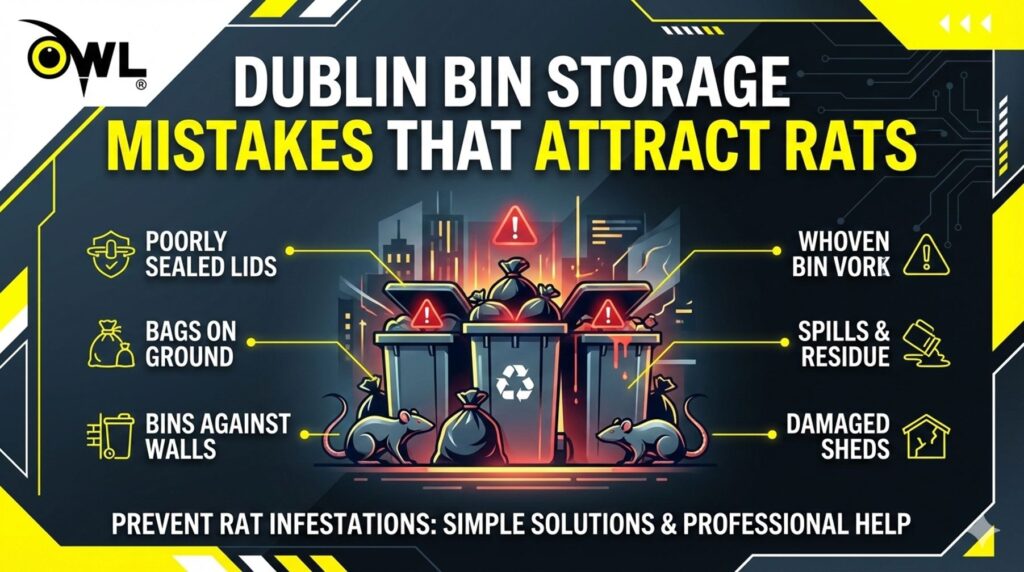
Dublin Bin Storage Mistakes That Attract Rats
Rats do not appear out of nowhere.
They follow food, warmth, and predictable patterns. And in Dublin, one of the most common patterns they follow is poor bin storage. Not dramatic neglect. Not abandoned properties. Just small, routine mistakes that make outdoor waste areas far more inviting than most people realise.
The frustrating part is that many rat issues begin with something that feels minor. A lid not fully closed. A bin stored against a wall. A few extra bags placed beside the container when it gets full. None of these seem urgent at the time. Over weeks, though, they become signals.
Rats are excellent at reading signals.
The good news is that most bin-related rat problems are preventable. It comes down to understanding what attracts them and adjusting habits before activity starts.
Why Bins Are Prime Targets in Dublin
Rats are opportunistic feeders. Urban areas offer consistent food access, and domestic waste is one of the easiest sources available.
Dublin’s combination of mild winters, dense housing, and shared waste areas means bins are rarely isolated. A single poorly managed storage area can affect neighbouring homes or units.
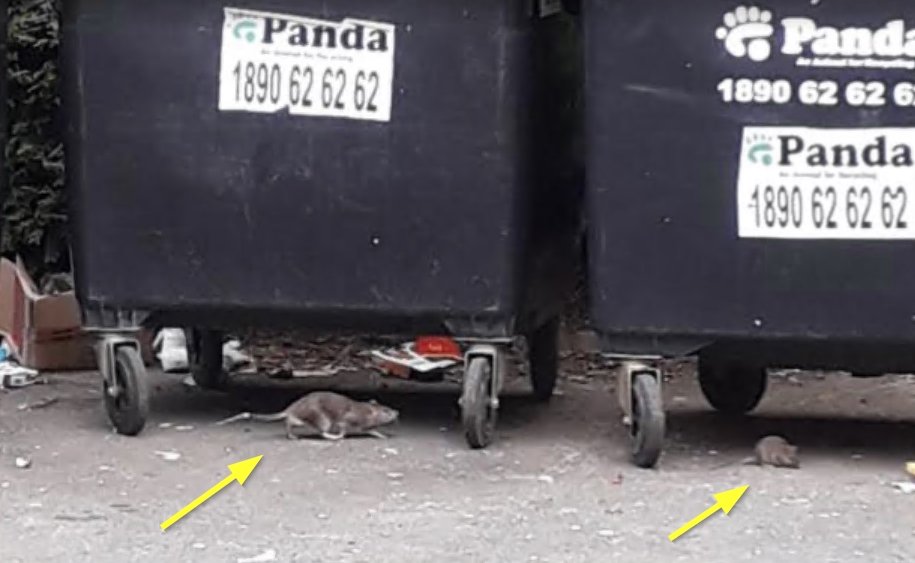
Rats are attracted by:
- Food waste that is loosely bagged
- Overflowing bins with exposed rubbish
- Grease residue around lids
- Compost stored incorrectly
- Bins placed directly against buildings
- Gaps behind bin sheds
It is rarely about one mistake. It is usually a pattern.
Common Bin Storage Mistakes That Encourage Rat Activity
1. Placing Bins Directly Against Walls
This is one of the most common errors.
When bins are pushed tightly against exterior walls, they create sheltered spaces behind them. Rats prefer to travel along edges and vertical surfaces where they feel protected. A bin touching a wall gives them both cover and easy access to potential entry points.
Leaving a small gap between bins and walls reduces this sheltered pathway and makes activity more visible.
2. Overfilled or Open Lids
Rats are strong and surprisingly agile. A slightly raised lid is enough.
Overflowing waste or loosely closed lids provide scent access. Once a rat identifies a consistent food source, it will return repeatedly and establish a routine. That routine becomes difficult to break without intervention.
Regularly checking that lids close fully and replacing damaged bins makes a noticeable difference.
3. Storing Extra Bags Beside the Bin
When bins are full, it can feel harmless to leave sealed bags next to them for a day or two.
Unfortunately, bags on the ground are far easier for rats to tear open. Even heavy-duty rubbish sacks are not rat-proof. Once ripped, they provide open feeding access and scent trails that attract additional rodents.
If a bin is consistently overflowing, the issue may not be behaviour but capacity.
Property managers often address this proactively. Teams like C.A.P.S, for example, factor bin capacity and waste collection schedules into property oversight, especially in multi-unit buildings where shared bins fill quickly. When waste systems are scaled properly, rodent attraction drops significantly.
4. Poorly Designed Bin Storage Areas
Bin sheds can help contain waste. But poorly maintained ones can create hidden nesting zones.
Gaps beneath shed panels, damaged doors, and broken mesh allow rats to enter and remain undisturbed. A dark, sheltered structure with consistent food access is ideal nesting territory.
Regular inspection of shed integrity is essential. This is something professional property management companies such as Midciti Property Management build into their maintenance checklists. Structural reviews, even of something as simple as bin storage areas, prevent small entry points from becoming long-term problems.
5. Ignoring Spilled Waste and Residue
Even when bins are sealed properly, spills around the base can attract rodents.
Leaking food waste, grease stains, and liquids pooling near bins create scent trails. Rats have an exceptional sense of smell. What seems insignificant to us can act as a strong attractant to them.
Occasional washing of bins and the surrounding ground area reduces these signals considerably.
Why Shared Properties Face Higher Risk
In apartment blocks and multi-unit housing, waste areas are communal. That means responsibility is shared. Unfortunately, standards are not always consistent.
One resident overfilling a bin or leaving waste outside can increase risk for the entire building.
This is why structured oversight matters. Property managers who implement clear bin policies, routine checks, and adequate collection schedules see fewer rodent-related complaints. Prevention is rarely about pest control alone. It is about system management.
Early Warning Signs of Rat Activity Near Bins
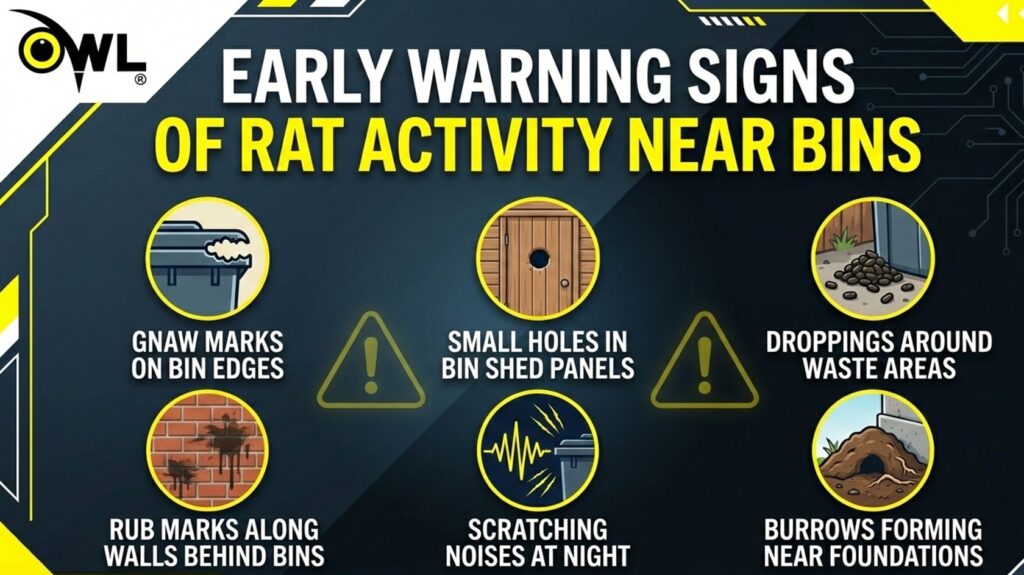
Most rat issues near bins and bin storage areas show early clues before becoming visible infestations.
Look for:
- Gnaw marks on bin edges
- Small holes in bin shed panels
- Droppings around waste areas
- Rub marks along walls behind bins
- Scratching noises at night
- Burrows forming near foundations
Catching these signs early makes intervention straightforward.
Waiting until rats are seen during daylight usually means activity has already increased.
Practical Steps to Reduce Risk
Here is a straightforward checklist for safer bin storage:
- Keep bins at least several centimetres away from exterior walls
- Ensure lids close tightly and are undamaged
- Avoid storing rubbish bags outside containers
- Clean bins and bin storage areas monthly
- Inspect bin storage areas for gaps or damage
- Trim vegetation around waste areas
- Schedule adequate collection frequency
None of these steps are complicated. They require consistency rather than urgency.
When Professional Intervention Is Necessary
If rat activity continues despite improved bin practices, the issue may extend beyond surface-level waste storage. There could be nesting sites nearby or structural access points that need professional assessment.
Early intervention prevents breeding cycles from establishing and reduces long-term disruption.
At Owl Pest Control, we work with homeowners, businesses, and property managers across Dublin to identify the source of rodent activity and implement practical, targeted solutions. The goal is not just removal, but prevention.
If you are noticing signs of rat activity around bins or bin storage areas and want reassurance that your waste storage setup is secure, we are always here to help.